Pure sequence, plain sequence or colour?
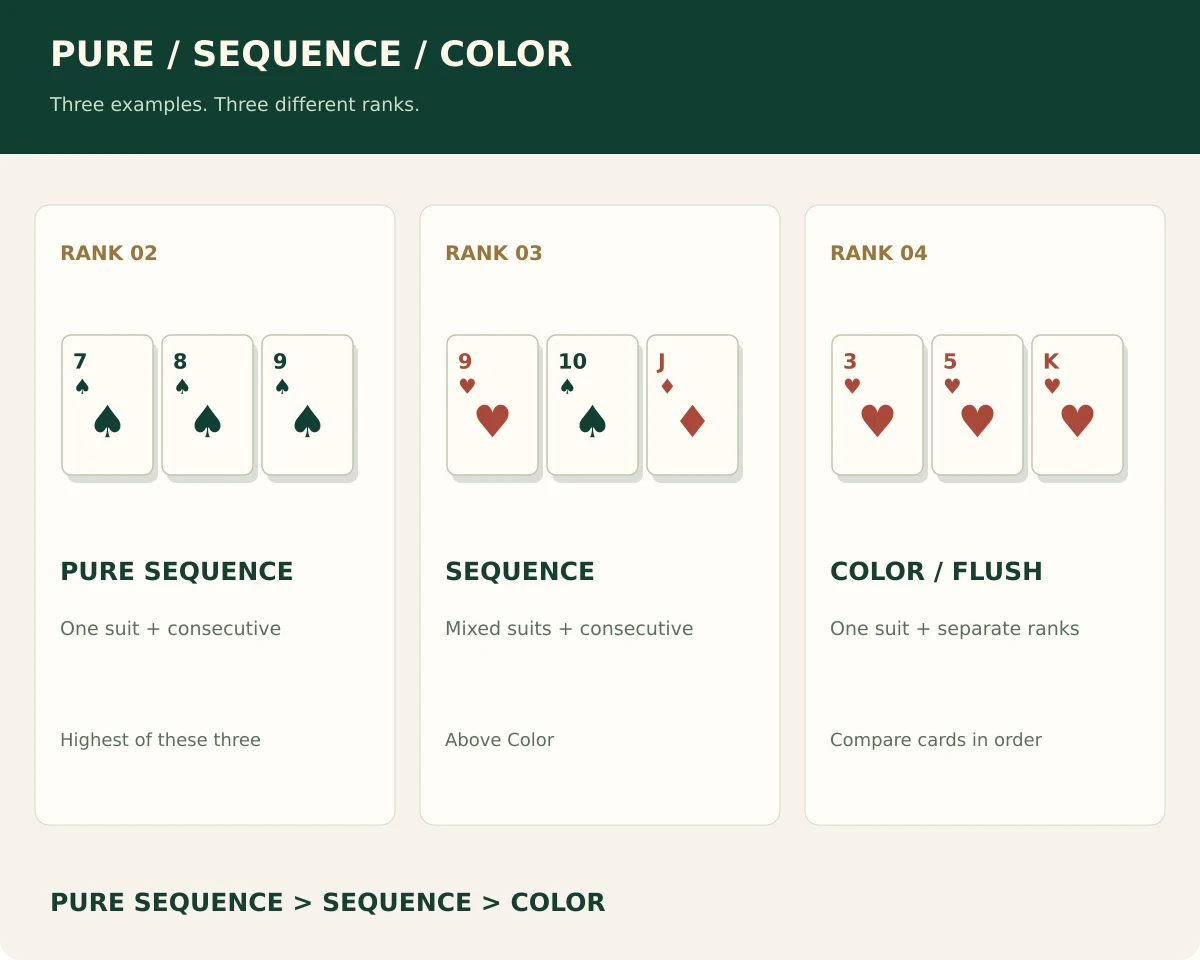
Lay out 7♠ 8♠ 9♠. Changing the suit of one card and changing its rank answer two different questions. Use these three deals to tell the categories apart.
Three hands side by side
| Hand | Ranks consecutive? | All one suit? | Category |
|---|---|---|---|
| 7♠ 8♠ 9♠ | Yes | Yes | Pure sequence |
| 7♠ 8♥ 9♠ | Yes | Mixed suits | Plain sequence |
| 7♠ J♠ 9♠ | Broken run | Yes | Colour |
Why one suit is only half the test
Spread the cards in rank order. If all three are consecutive and share a suit, call the hand pure. If the ranks leave a gap but share a suit, compare it as a colour.
When a plain run outranks a colour
3♠ 4♥ 5♦ beats A♣ J♣ 8♣. The ace cannot turn a flush into a run.
An ace in the example
A♣ 2♣ 3♣ qualifies as a pure sequence. The table sets its position among other pure sequences.
Which hands still outrank these three?
A trail outranks all three examples in classic Teen Patti.
Colour against colour
Sort each colour from highest to lowest. Compare the highest cards, then the second and third if necessary.
Names on a rule card
Phrases such as “pure run”, “straight flush” or “pakki run” may denote the same three-card pattern. Check the example hand beside the name.